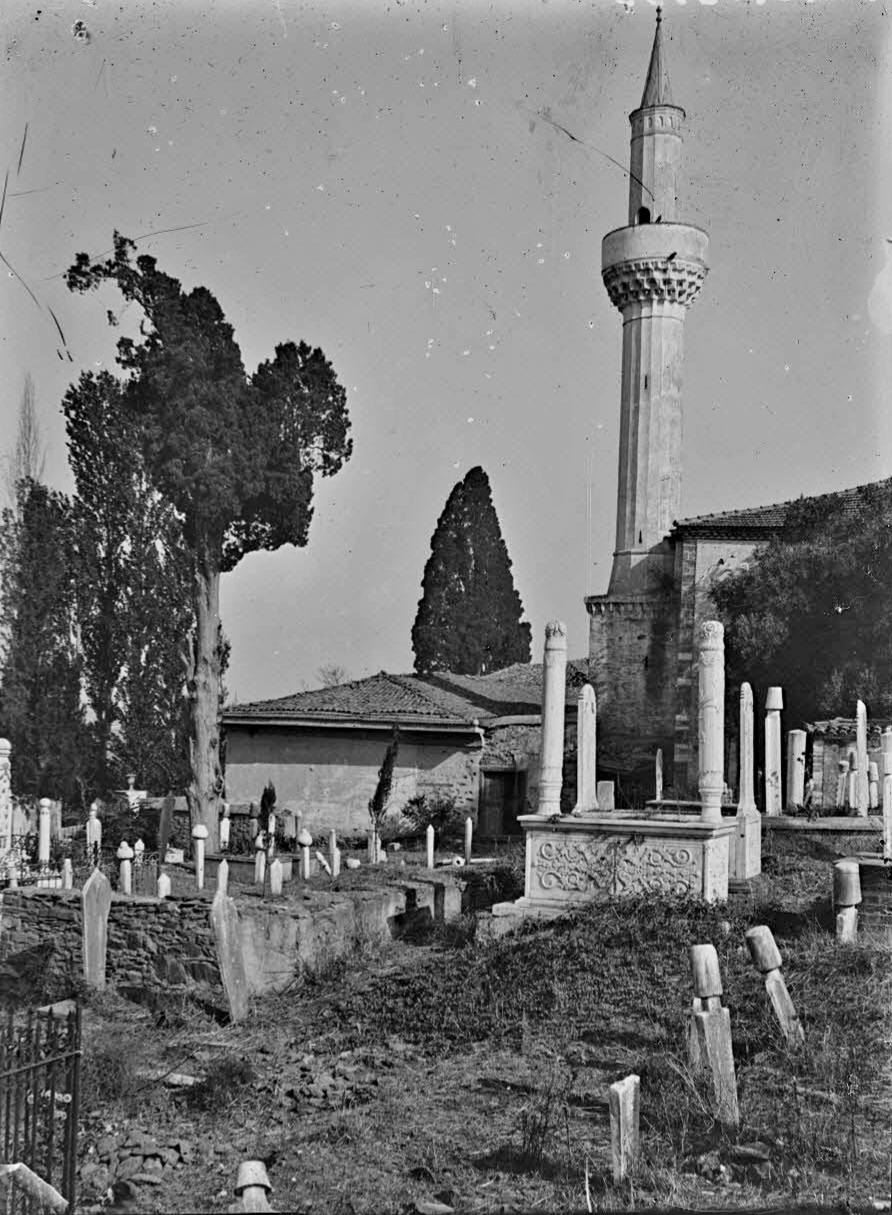
The Mevlevi Hane tekkeh in Thessaloniki, in photographs from 1917-1918.
Φωτ: ΆγνωστοςΆγνωστος
Ιστορικά Τοπόσημα και Μνημεία
ΜοιράσουΤίτλος
The Mevlevi Hane tekkeh in Thessaloniki, in photographs from 1917-1918.
Περιγραφή
The term tekke comes from the Turkish word tekke, which is a rendering of the Arabic word takiya, which translates as "place for support" or "place for rest". Hane means home. The Mevlevi Hane was the gathering place, called a monastery, of the Mevlevi dervishes. It was located outside the northwestern walls, where the then Yeni Kapi Street, today's St. Demetrios Street, began, east of Lagada Street, in the present-day area of Panagia Faneromeni. In its place today there is the 59th and 61st primary school. The now lost tepee was the most famous and richest Mevlevi monastery in the Ottoman Empire and the only one in the wider region of the southeastern Balkans. The monastery was built in 1615, by Ekmekji Ahmed Pasha and included a mosque, a medrese (training school), dormitories, a fountain and a cemetery. The revolving dervishes were wiped out by Mustafa Kemal Atatürk between 1923-1930 and the Young Turks who hated anything religious and mystical. He imprisoned them, disbanded their orders and emptied their monasteries. The Mevlevi Hane was demolished in 1925-27 and school complexes were built in its place.
Συνεισφέρων/Συντελεστής
Δημιουργός
Άγνωστος Άγνωστος
Μορφότυπος
JPG
Άδεια Χρήσης
http://creativecommons.org/licenses/by-nc-nd/4.0
Γεωγραφική Κάλυψη
Thessaloniki, Central Macedonia, Greece
Χρονική κάλυψη
World War I and Asia Minor Campaign
Ημερομηνία Ψηφιοποίησης
Unknown
Θέμα
Ιστορικά Τοπόσημα και Μνημεία
Κάτοχος Δικαιωμάτων
Society for Macedonian Studies